from latest-news - SUCH TV https://ift.tt/3BKLnqr
google-site-verification=PQhoeY8jjSrcyLjfBbnc50coDKLcSE_kcv93i2a1668


The court extended the pre-arrest interim bail of the Leader of Opposition in National Assembly and his son till September 25.
Shehbaz and Hamza appeared before the court in the case hearing today.
Shehbaz Sharif earlier stated that the charges of corruption and money laundering could not be applied over him as he was neither a partner nor a director in the case related to Ramzan Sugar Mills.
“I didn’t give any subsidy to the sugar mills during my tenure as the chief minister and appeared scores of times for the inquiry”, PML-N leader said.
Hamza Shehbaz in his statement said that he was questioned one year ago in jail and he replied the questions asked to him. “I was told that my arrest not required in the case,” Hamza said.
In the sugar scam, Shehbaz Sharif and his two sons, Hamza and Suleman Shehbaz, were booked by the Federal Investigation Agency (FIA) under the charges of financial fraud, corruption and money laundering charges.

According to military’s public relations wing, matters related to mutual interest, including defence and security cooperation between the two countries and overall regional security situation, especially the current situation in Afghanistan came under discussion.
The two dignitaries also discussed cooperation in multiple fields including security cooperation, joint training and counter terrorism domain, said the ISPR.
Speaking on the occasion, COAS Gen Bajwa said that Pakistan will continue to work for peace and stability in Afghanistan, adding that Pakistan will support the establishment of an inclusive government in Afghanistan.
Separately, Prime Minister Imran Khan had cautioned Dominic Raab against the role of ‘spoilers’, both inside and outside Afghanistan, which could destabilise the situation.
Read more: PM CAUTIONS AGAINST SPOILERS TRYING TO DESTABILISE SITUATION IN AFGHANISTAN
British Foreign Secretary Dominic Raab had called on PM Imran Khan in Islamabad. They exchanged views on the latest developments in Afghanistan, as well as bilateral matters and regional and international issues.
Recalling his telephonic conversation with his British PM Boris Johnson, the premier had shared Pakistan’s perspective on the evolving situation in Afghanistan. He underlined the importance of a peaceful, secure and stable Afghanistan for Pakistan and regional stability.

According to the latest figures issued by the National Command and Operation Center (NCOC), 3,980 persons tested positive for COVID-19.
Pakistan has conducted 64,053 tests in the past 24 hours out of which 3,980 persons tested positive for the disease. The country has conducted overall 17,931,365 tests to diagnose the deadly virus.
The COVID positivity ratio was recorded at 6.21 per cent as compared to yesterday’s ratio of 6.33%.
The NCOC said 5,606 people are in critical condition.
The United States (US) on Friday shipped 6.6 million doses of Pfizer vaccine to Pakistan via the COVAX global distribution program to help the country inoculate its population against Covid-19.
“The U.S. has shipped another tranche of Pfizer vaccines to Pakistan. The 6.6 million doses will arrive in time to assist the Pakistani government inoculate young and at-risk Pakistanis and mitigate the fourth COVID-19 wave,” said the US Embassy in Islamabad in a Twitter statement.

The South Asian country registered 3,787 more coronavirus cases in the last 24 hours after 59,745 tests were taken, taking the cumulative caseload to 1,171,578, the National Command and Operation Centre's data showed Friday morning.
The number of active coronavirus cases, too, have been declining for the last three days. The active cases fell to 90,076 Friday.
The positivity rate was recorded at 6.33%.
With 57 more deaths, the death toll crossed the 26,000 mark and now stands at 26,035, according to the NCOC stats.
The country’s daily recoveries continue to outnumber the daily new cases. Over 6,595 recoveries in the last 24 hours took the number of Pakistan's cumulative recoveries to 1,055,467.
Pakistan is reporting 3,911 new infections on average each day, 67% of the peak — the highest daily average reported on June 17.
The country has administered at least 58,156,714 doses of COVID vaccines so far. Assuming every person needs 2 doses, that’s enough to have vaccinated about 13.4% of the country’s population.
During the last week reported, Pakistan averaged about 1,019,949 doses administered each day. At that rate, it will take a further 43 days to administer enough doses for another 10% of the population.

Health minister Sajid Javid said that a third dose will be offered by the state-run health service to those who "may have received less protection against the virus from two vaccine doses".
Javid announced the rollout after the government advisory body the Joint Committee on Vaccination and Immunisation (JCVI) recommended a third dose for those aged over 12 who have conditions such as leukaemia, advanced HIV or recent organ transplants.
It said that the third dose by preference should be an mRNA vaccine -- so, not the AstraZeneca jab.
The announcement comes as the UK government is considering whether to follow several other countries in issuing booster jabs to the population as a whole, potentially in early September alongside the flu jab.
Javid said that the "third primary vaccine" jab was not the same as a booster shot.
He said the government was "continuing to plan" for a booster programme to begin in September, prioritising those most at risk, including those eligible for a third vaccine dose.
The World Health Organization has condemned the rush by wealthy countries to provide Covid vaccine booster shots, while billions around the world have yet to receive a single dose.
In a report published on Wednesday, the European Centre for Disease Prevention and Control said there was no urgent need to administer booster jabs to the fully vaccinated -- though it said an extra dose may benefit those with weak immune systems.

The new carrier, Fly Jinnah, will operate as a joint venture between the pair, they said in a statement, adopting the low-cost model operated by Air Arabia.
The statement said the new airline would help Pakistan's travel and tourism sector and contribute to the country's economic growth and job creation.
Prime Minister Imran Khan in a tweet welcomed Air Arabia to Pakistan and wished the group success in establishing the new airline.
"My government is committed to attracting investment in Pakistan's burgeoning travel & tourism sector which offers immense opportunities," he wrote.
Air Arabia operates from Sharjah and Ras Al Khaimah in the United Arab Emirates, and has similar joint ventures in Abu Dhabi, Egypt, Morocco and Armenia. Its shares are listed on the Dubai Financial Market.
The airline has been pushing ahead to expand in the wake of the coronavirus outbreak last year as low-cost carriers bet on a post-pandemic surge in travel.

Record rainfall, which prompted an unprecedented flash flood emergency warning for New York City, turned streets into rivers and shut down subway services as water cascaded down platforms onto tracks.
"I'm 50 years old and I've never seen that much rain ever," said Metodija Mihajlov whose basement of his Manhattan restaurant was flooded with three inches of water.
"It was like living in the jungle, like tropical rain. Unbelievable. Everything is so strange this year," he told AFP.
Hundreds of flights were cancelled at LaGuardia and JFK airports, as well as at Newark, where video showed a terminal inundated by rainwater.
"We're all in this together. The nation is ready to help," President Joe Biden said ahead of a trip Friday to the southern state of Louisiana, where Ida earlier destroyed buildings and left more than a million homes without power.
Flooding closed major roads across New Jersey and New York boroughs including Manhattan, The Bronx and Queens, submerging cars and forcing the fire department to rescue hundreds of people.
At least 23 people died in New Jersey, Governor Phil Murphy told reporters.
"The majority of these deaths were individuals who got caught in their vehicles," he said.
A state trooper died in the neighboring state of Connecticut.
Thirteen died in New York City, including 11 who could not escape their basements, police said. The victims ranged from the ages of two to 86.
"Among the people MOST at risk during flash floods here are those living in off-the-books basement dwellings that don't meet the safety codes necessary to save lives," lawmaker Alexandria Ocasio-Cortez tweeted.
"These are working class, immigrant, and low-income people & families," she added.
Three also died in the New York suburb of Westchester, while another four died in Montgomery County outside Philadelphia in Pennsylvania, a local official confirmed.
Ida blazed a trail of destruction north after slamming into Louisiana over the weekend, bringing severe flooding and tornadoes.
"We're enduring an historic weather event tonight with record-breaking rain across the city, brutal flooding and dangerous conditions on our roads," New York Mayor Bill de Blasio said late Wednesday.
State emergencies were declared in New York and New Jersey while the National Weather Service issued its first-ever emergency flash flood warning for New York City, urging residents to move to higher ground.
"You do not know how deep the water is and it is too dangerous," the New York branch of the National Weather Service (NWS) said in a tweet.
The NWS recorded 3.15 inches (80 millimeters) of rain in Central Park in just an hour -- beating a record set just last month during Storm Henri.
The US Open was also halted as howling wind and rain blew under the corners of the Louis Armstrong Stadium roof.
New Yorkers woke to clear blue skies Thursday as the city edged back to life, but signs of the previous night's carnage weren't far away: residents moved fallen tree branches from roads as subway services slowly resumed.
By Thursday evening, around 38,000 homes in Pennsylvania, 24,000 in New Jersey and 12,000 in New York were without power, according to the website poweroutage.us, a significant decrease from earlier in the day.
It is rare for such storms to strike America's northeastern seaboard and comes as the surface layer of oceans warms due to climate change.
The warming is causing cyclones to become more powerful and carry more water, posing an increasing threat to the world's coastal communities, scientists say.
"Global warming is upon us and it's going to get worse and worse and worse unless we do something about it," said Democratic senator Chuck Schumer.
In Annapolis, 30 miles (50 kilometers) from Washington, a tornado ripped up trees and toppled electricity poles.
The NWS warned the threat of tornadoes would linger, with tornado watches in effect for parts of southern Connecticut, northern New Jersey, and southern New York as Ida tracked north through New England.
A tornado struck the popular tourist destination Cape Cod, Massachusetts on Thursday evening.

The demonstration at the Asoke intersection in central Bangkok was one of the biggest such gatherings this year despite a warning from the police earlier in the day that protests are banned due to coronavirus restrictions.
Protests against Prayuth have gained momentum since late June as groups who sought his removal last year return with broader support from people angered by a worsening coronavirus situation.
Thailand has recorded more than 1.2 million infections and 12,103 deaths since the pandemic started last year, with most of the cases and deaths occurring since April this year. The demonstration is also taking place while Prayuth is facing a grilling in parliament in a censure debate that started earlier this week.
The political opposition accuse the prime minister and five other cabinet ministers of corruption, economic mismanagement and of bungling the coronavirus response.
Prayuth and his ministers have rejected the opposition accusations and defended their performance to parliament.
They are expected to survive the no-confidence vote scheduled for Saturday, due to the ruling coalition’s clear parliamentary majority, but the protesters say they will keep up pressure on Prayuth.
“The members of parliament have to chose between the people and Prayuth who has failed, causing losses and deaths of more than 10,000 people,” said Nattawut Saikua, one of the main organisers of the protest.
“If Prayuth passes the no-confidence vote and remains prime minister we will continue to drive him out,” he said.
While the demonstration at Asoke was peaceful, a smaller group of anti-government
protesters set off fire crackers and burn car tires on Thursday near the prime minister’s residence in another part of the city.

"The Indian charge d'affaires was summoned to the Foreign Office today and conveyed Pakistan's strong demarche on Indian occupation forces' callous and inhuman handling of the mortal remains of the iconic Kashmiri leader and freedom fighter Syed Ali Shah Geelani," the Foreign Office said in a statement.
It was also conveyed to the envoy that India's actions were a "blatant violation" of international humanitarian laws and all tenets of civil and human rights, the FO added.
Geelani, who passed away on Wednesday, was buried in a tightly controlled pre-dawn ceremony on Thursday morning as Indian authorities imposed a lockdown across Indian-occupied Kashmir.
He was buried at a cemetery near his home in the main city of Srinagar, a police source told AFP. Only a small number of his relatives were present, including two of his sons, the source added.
Geelani, the most outspoken critic of India who spent several years in jail or under house arrest, had wanted to be buried at the Martyrs Cemetery in Srinagar. But authorities rejected that request, the police source said.
"We basically took control of the arrangements," the official said.
In its statement today, the FO noted that authorities in Indian-occupied Kashmir had repeatedly "resorted to indiscriminate use of force against Kashmiris protesting [the forces'] inhuman conduct".
In view of India's actions in the past and to keep things from spiralling out of control in the occupied valley, there was a possibility of India "stage-managing some mischief" in Kashmir to divert attention and attempt to deflect the blame of its own indefensible actions on Pakistan or the Hurriyat leadership, the FO cautioned.
Pakistan stressed upon the envoy that India "must refrain from any missteps that might further jeopardise regional peace".
He was also reminded of Pakistan's stance that India should lift the "illegal military siege" in occupied Kashmir, stop measures aimed at changing the territory's demography, withdraw its occupation troops and cease all its human rights violations, the FO added.
Pakistan's position that lasting and durable peace in the region was dependent on the peaceful resolution of the Jammu and Kashmir dispute in accordance with the relevant UN Security Council resolutions and the wishes of the Kashmiri people was also conveyed to the Indian envoy, according to the FO statement.
Funeral prayers in absentia for the late Hurriyat leader were offered at the Faisal Mosque in Islamabad on Friday. President Dr Arif Alvi and other leaders attended the funeral prayers.
A day earlier, the Pakistani nation paid rich tribute to Geelani for his life-long struggle for justice and freedom, with the country's flag flying at half-mast.
Funeral prayers in absentia were also offered in Karachi by members of the Pakistan Tehreek-i-Insaf and Jamaat-i-Islami.

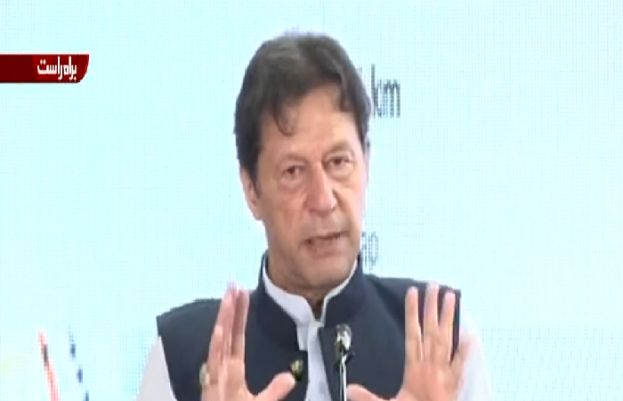
Addressing the launching ceremony in Islamabad, the premier said the construction sector was the biggest provider of job opportunities because it had numerous industries attached to it.
"This is one way of providing employment, wealth creation, increasing revenues to meet expenses and repaying loans. We will repay loans when the economy grows and more than anything, it grows on the basis of construction," he said.
The prime minister called upon the construction sector to fully try and depend less on imports, saying that "all raw material is available in Pakistan."
"I assure you that we will fully help you. It is the government's job to manufacture more things in Pakistan," he added.
According to Prime Minister Imran, a "construction boom" was coming to the country due to the great demand by the 220 million people for low-cost housing.
He lamented that the common man, daily wager or government servants never had the opportunity in the past to build their homes because of a lack of mortgage-financing options but that obstacle was now removed due to the government's efforts to pass the foreclosure law.
"Banks will give money to people for mortgage financing and then this population of 220m of ours will become an asset because it will generate demand and then construction and related industries will start running."
The premier told the event that he had called the chief of the International Monetary Fund to gain concessions for the construction industry during the Covid-19 pandemic.
He also said that over the course of numerous meetings, "we realised ... our entire system has evolved in such a manner that it puts obstacles instead of facilitating and encouraging industry and wealth creation."
When a society begins to decline, the premier said, its bureaucracy too devolves and becomes self-serving instead of encouraging growth and prosperity. "It takes time to change the system," he added.
Prime Minister Imran said many meetings had been held to remove obstacles for the construction industry and while they hadn't been eliminated fully, there were more incentives for the industry than before and the government would continue increasing them.
Speaking about problems within the Federal Board of Revenue (FBR), he said the government was "continuously trying to bring reforms" in the body, pointing out that Finance Minister Shaukat Tarin hailed from the private sector and was familiar with its issues.
He said the true potential of Pakistan's population would be realised when the industry, particularly the export industry, was encouraged.
"It is necessary that we help ourselves, facilitate you and the government creates ease of doing business for you but then you too help the government by paying tax," he emphasised.
He said until taxes were paid, the country's wealth wouldn't increase and the government wouldn't be able to facilitate the construction sector so "it is a two-way system."
"We have to help you so your wealth increases. You have to help us through paying tax so we can improve infrastructure and fulfil basic requirements of people."
The premier said the government would continue to work with the ICCI and resolve its issues.


ANNOUNCEMENT:
— Murad Raas (@DrMuradPTI) September 3, 2021
All Public & Private Schools of Punjab to be closed from September 6th to September 11th, 2021 due COVID 19 conditions. Please stay home and stay safe. Protect yourself and your families.
“All Public & Private Schools of Punjab to be closed from September 6th to September 11th, 2021 due COVID 19 conditions,” the minister tweeted.
Murad Raas urged everyone to adhere to COVID-19 SOP. “Please stay home and stay safe. Protect yourself and your families.”

The silver medal was bagged by Ukraine’s Zhabnyak with a 52.43 metres throw, while Brazilian Teixeira de Souza won bronze with a 51.86 throw.
Haider, who suffers from cerebral palsy, also competed in the discus throw at the World Para-Athletics Championship in Dubai in 2019 and won a silver medal for Pakistan.
Cerebral palsy is a disorder because of which one part of a person’s body becomes weakened as compared to other parts. All para-athletes with cerebral palsy participate in the F37 category.
Remember, Haider had competed in the long jump at the Paralympics, winning a silver medal in 2008 and a bronze medal in 2016.
He was the last hope for Pakistan to win a medal after the other Pakistani athlete, Anila Izzat Baig, had been disqualified.

According to the latest figures issued by the National Command and Operation Center (NCOC), 3,787 persons tested positive for COVID-19, lifting the overall number of infections in the country to 1,171,578.
Pakistan has conducted 59,745 tests in the past 24 hours out of which 3,787 persons tested positive for the disease. The country has conducted overall 17,931,365 tests to diagnose the deadly virus.
The COVID positivity ratio was recorded at 6.33 per cent as compared to yesterday’s 6.65%.
The NCOC said 5,606 people are in critical condition.
So far, a total of 58,156,714 vaccine doses have been administered to the masses across the country.
Out of 58,156,714, the number of fully vaccinated people against the coronavirus is 18,004,529, while 44,701,679 partial doses have been administered to date.
On Thursday, Federal Minister for Planning and Development, Asad Umar had appealed to the public to adhere to the COVID-19 standard operating procedures to avert the chances of any other wave in the country.
In a tweet, the NCOC head urged citizens to follow Standard Operating Procedures (SOPs) to contain the spread of COVID-19 as the hospital inflow and critical care COVID patients, both reached the highest level since the start of the pandemic.

Italy, which holds the rotating G20 presidency this year, has previously signalled it was looking to call a one-off summit in the middle of the month. The United Nations assembly ends on September 30.
Draghi told reporters that Europe had to do a better job of confronting such crises. "It is unthinkable that things can carry on like this," he said.
Earlier, Italy's foreign minister Luigi Di Maio, in a parliamentary hearing, has said that Rome was working on the idea of organising an ad hoc summit of the G20 on Afghanistan.
"Due to its structure and representation, the G20 can be an important multilateral platform for responsible and coordinated management of global challenges," Di Maio told members of parliament.
Italy, which holds the rotating G20 presidency this year, wants an in-depth debate on Afghanistan.

The prototype is similar in appearance to the robotic helicopter Ingenuity, developed by NASA for its Perseverance mission this year, according to a photograph posted on the website of China’s National Space Science Center on Wednesday.
The agency said the helicopter could be a tool for China’s follow-up exploration on Mars, but it did not give details.
China landed a Mars rover in May in its first-ever mission to the planet, becoming the second country after the United States to do so. NASA’s most advanced rover, Perseverance, landed on the planet in February.
From the NASA rover, Ingenuity made its inaugural flight in April, rising about 3 metres (10 feet) above the surface, in humankind’s first successful deployment of a powered aircraft in a world other than Earth.
The challenge for the 1.8 kg (4 pound) Ingenuity is the planet’s thin atmosphere, which is just 1% as dense as Earth’s.
To compensate for the lack of aerodynamic lift, NASA engineers equipped Ingenuity with rotor blades that are larger – 1.2 metres (4 feet) tip to tip – and spin more rapidly than would be needed on Earth for an aircraft of its size.
Like Ingenuity, the Chinese prototype sports two rotor blades, a sensor-and-camera base and four thin legs. But there is no solar panel at the top like Ingenuity, according to the photograph.
Ingenuity has made more than 10 outings since April, covering an overall distance of more than 2 km (1.2 miles) with flight time of about 20 minutes in all.
China is planning its first crewed mission to Mars in 2033.

According to data released by the central bank, its foreign currency reserves on August 27 stood at $20,145.6 million. The same reserves stood at $17,578.9 million on August 20.
After accounting for external debt payments, the SBP’s reserves have increased by $2,567 million to $20.145.6 million due to the government’s official inflows.
Overall, liquid foreign currency reserves held by the country, including net reserves held by banks other than the SBP, stood at $27,227.7 million.
Meanwhile, net reserves held by banks amounted to $7,082.1.
SDR allocation
The central bank had received $2.75 billion from the Fund under its new allocations for member countries to fight against COVID-19 challenges.
Pakistan was due to receive the amount on August 23 from IMF's general allocations of $650 billion, which had been approved to boost global liquidity amid the coronavirus pandemic across the globe.
The amount was directly transferred to the SBP, which has further improved the country’s foreign exchange reserves.
The Board of Governors of the IMF had approved a general allocation of SDRs equivalent to $650 billion on August 2, 2021.
According to an IMF statement, the allocation would benefit all members, address the long-term global need for reserves, build confidence, and foster the resilience and stability of the global economy.
It would particularly help the most vulnerable countries struggling to cope with the impact of the COVID-19 crisis.

“We have got approval to send the team to Australia,” chief executive of the Afghanistan Cricket Board Hamid Shinwari told AFP.
During their first stint in power, before they were ousted in 2001, the Taliban banned most forms of entertainment — including many sports — and stadiums were used as public execution venues.
The Taliban do not mind cricket, however, and the game is popular among many fighters.
The Test match, to be played in Hobart from Nov 27 to Dec 1, was scheduled for last year but was put off due to the Covid-19 pandemic and international travel restrictions.
It will be Afghanistan's first Test in Australia.
Before the Australia tour, the Afghanistan team will feature in the Twenty20 World Cup, to be held in the United Arab Emirates from Oct 17 to Nov 15.
Shinwari also confirmed Afghanistan's Under-19 cricket team will tour Bangladesh for a bilateral later this month.
Since the evacuation of the US and Nato forces from Afghanistan after the Taliban swept into Kabul last month, there were fears that cricket and other sports would be hit.
But ACB officials categorically said that cricket was supported by the Taliban.
Afghanistan's home ODI series against Pakistan — shifted to Sri Lanka — was however cancelled until next year over logistical and Covid-19 issues last week.

According to the latest figures provided by the National Command and Operation Centre (NCOC), 61,651 coronavirus tests were conducted in the country, out of which 4,103 came back positive.
The positivity ratio was recorded at 6.65% in the country as of today.
The total tally of COVID-19 cases now stands at 1,167,791, with most cases reported in Punjab.
The number of recoveries nationwide has reached 1,048,872 so far, while the number of active cases in the country stands at 92,941 as of today.
According to the official portal, the total number of COVID-19 patients in Sindh has reached 433,931, in Punjab 396,326, in Balochistan 32,282, in Khyber Pakhtunkhwa 163,010, in Islamabad 99,910, in Azad Kashmir 32,380 and 9,952 in Gilgit-Baltistan.
Pakistan is reporting 3,975 new infections on average each day, 68% of the peak — the highest daily average reported on June 17.
The country has administered at least 56,768,446 doses of COVID vaccines so far. Assuming every person needs 2 doses, that’s enough to have vaccinated about 13.1% of the country’s population.
During the last week reported, Pakistan averaged about 936,145 doses administered each day. At that rate, it will take a further 47 days to administer enough doses for another 10% of the population.

He had been ill for a long time and was admitted to a private hospital in Karachi, according to the BNP. He was 92.
Born in 1929, Mengal spent his childhood in Lasbela and later moved to Karachi. He was declared the chief (sardar) of the Mengal tribe in 1954.
Mengal was introduced to politics by Mir Ghaus Bakhsh Bizenjo, a founding member of the National Awami Party (NAP) – who also briefly served as the governor of Balochistan in 1972-73. In 1962, Mengal was elected to the West Pakistan provincial assembly; Bezinjo ran his election campaign.
Mengal became the first chief minister of Balochistan in May 1972 and remained in that position until his government was dismissed by then prime minister Zulfikar Ali Bhutto in Feb 1973.
Mengal chose to go into self-exile in London during General Ziaul Haq's era. He returned to Pakistan in the 1990s and formed the BNP.
He also remained the head of the Pakistan Oppressed Nations Movement (Ponm).
He hailed from the Wadh tehsil in Balochistan's Khuzdar.
The late Baloch leader will be buried in his ancestral graveyard in Wadh and details of his funeral will be announced later, the BNP said.
Paying rich tribute to his father, the late leader's son and current BNP chief, Akhtar Mengal, said he had not lost only his parent but also his "guiding light and teacher".
"He taught me the difference between the good and the bad. To fight for injustice with conviction. He was a beacon of hope for our nation and land," Akhtar said.
Condolences poured in from politicians and journalists on Mengal's death.
PPP Chairperson Bilawal Bhutto-Zardari said he was saddened to hear about Mengal's passing away.
"An era of intellect, tolerance and honourable politics has concluded in Pakistan with Sardar Ataullah Mengal's death. His long struggle for Balochistan's rights and democracy is an unforgettable part of our history," Bilawal said.

WhatsApp said the fine was “entirely disproportionate” and that it would appeal. Still, the Irish fine is significantly less than the record $886.6m fine meted out to Amazon by the Luxembourg privacy agency in July.
Ireland's Data Privacy Commissioner (DPC), which is the lead data privacy regulator for Facebook within the European Union, said the issues related to whether WhatsApp conformed in 2018 with EU data rules about transparency.
“This includes information provided to data subjects about the processing of information between WhatsApp and other Facebook companies,” the Irish regulator said in a statement.
A WhatsApp spokesperson said in a statement that the issues in question related to policies in place in 2018.
“WhatsApp is committed to providing a secure and private service. We have worked to ensure the information we provide is transparent and comprehensive and will continue to do so,” the spokesperson said.
“We disagree with the decision today regarding the transparency we provided to people in 2018 and the penalties are entirely disproportionate,” the spokesperson's statement said.
EU privacy watchdog the European Data Protection Board said it had given several pointers to the Irish agency in July in order to address criticism from its peers for taking too long to decide in cases involving tech giants and for not fining them enough for any breaches.
It said a WhatsApp fine should take into account Facebook's turnover and that the company should be given three months instead of six months to comply.
Data regulators from eight other European countries triggered a dispute-resolution mechanism after Ireland shared its provisional decision in relation to the WhatsApp inquiry, which started in December 2018.
In July, a meeting of the European Data Protection Board issued a “clear instruction that required the DPC to reassess and increase its proposed fine on the basis of a number of factors contained”, the Irish regulator said.
“Following this reassessment, the DPC has imposed a fine of 225 million euros on WhatsApp,” it said.
The Irish regulator also reprimanded and ordered WhatsApp to bring its processing into compliance by taking “a range of specified remedial actions”.
The Irish regulator had 14 major inquiries into Facebook and its subsidiaries WhatsApp and Instagram open as of the end of last year.
Austrian privacy campaigner Max Schrems, who has taken on Facebook in several privacy cases, said he would monitor the company's appeal closely.
“It is to be expected that this case will now be before the Irish Courts for years and it will be interesting if the DPC is actively defending this decision before the Courts, as it was forced to make such a decision by its EU colleagues at the EDPB,” he said.

Geelani was laid to rest in a tight military siege at Haiderpora in Srinagar early Thursday morning under the close watch of the Indian security forces. Indian authorities had put strict restrictions on people's movement and the whole area was cordoned off.
Foreign Office Spokesperson Asim Iftikhar in a statement said, as the family was preparing for the last rites of Syed Geelani, that a heavy contingent of the occupation forces raided his residence in Srinagar, harassed family members and snatched Syed Geelani’s body.
“When the family members told the raiding party that Syed Geelani’s will was to be buried in the ‘Cemetery of Martyrs’ in Srinagar, they were reportedly told that India would not allow Geelani’s burial at the place of his choosing,” he said.
The FO spokesperson said the government of India is so afraid of Geelani and what he stood for, that they have now resorted to this inhuman act even after his passing away.
“This shows the degree of callousness on part of the Occupation Forces and demonstrates beyond doubt that India would trample all civil and human values in perpetuating its occupation of IIOJK,” the statement added.
Indian media subsequently reported that Geelani has been buried. A curfew has been imposed in the valley and all internet services suspended.
The spokesperson urged the international community to take serious note of this unprecedented and egregious situation in the Indian Occupied Kashmir and hold India to account for its breaches of international human rights and humanitarian laws.
Although Geelani and his family wanted him to be buried at the Cemetery of Martyrs in Srinagar, Indian authorities did not allow it, fearing agitation from people of occupied Kashmir.
He was buried just a few meters away from his house in Haiderpora, Srinagar.
A small number of people mainly some close relatives were allowed to participate in the funeral prayers and to have a last glimpse of the martyred leader.
The Indian army had laid restrictions all across the occupied valley to prevent a mammoth gathering on Geelani's funeral.
“Soon after the news of Syed Ali Geelani’s demise spread out, announcements were made from mosques around Srinagar calling out people to come out of their homes to pay homage to Syed Ali Geelani,” according to a Radio Pakistan report.
However, Indian authorities, the report added, used coercive measures to dissuade people from coming out of their homes. Several Hurriyat leaders and activists including Mukhtar Ahmad Waza have been rounded up by the Indian authorities as well.
The All Parties Hurriyat Conference has also fervently appealed to the people of Kashmir to come out of their homes and hold a large protest against the cruelty of the Modi regime.

Addressing a gathering in Islamabad today, the minister said he had spoken to the Frontier Constabulary, following which the border management could decide to close the border.
The minister's remarks come a few days after Army Chief Gen Qamar Javed Bajwa reaffirmed that Pakistan's borders were secure despite the challenges the country faces and that the armed forces were "prepared to meet any situation".
While Rashid, in his statement today, indicated of a security threat at the Chaman border, he insisted that the situation at the Torkham border was "normal”.
The minister said the Pakistan Army was deployed at the border and that the forces were keeping a check on movement along the divide.
He was of the view that crisis and bloodshed in Afghanistan was under control, adding that “we want complete peace there.”
The minister said he had asked the Islamabad police chief to beef up its Eagle Squad.
“This region is going to be very important," Rashid said. "Islamabad is our capital and the whole world have their eyes on it."
He also highlighted the government's plan to revamp police stations at the outskirts of Islamabad.
Responding to a question, the interior minister said the clamour for a national government was a "dream". He did, however, say that the government was ready for a "national reconciliation".
He commented on the opposition's planned long march towards the capital, saying the "time is not feasible" for such an activity due to the evolving regional situation. “But if they are persistent with their plan, then the law enforcement [agencies] will perform their duties under the law to deal [with any law and order situation].”
The minister denied the presence of any American nationals in Pakistan, saying “those who had arrived [from Afghanistan] have returned via the port. We allowed 600 Japanese yesterday and also permitted the U-19 team of India, and if anyone else asks so, we will grant them a 21-day transit visa.”
In response to another question, Rashid said Indian media wanted to lay the blame of the situation in Afghanistan on the ISI (Inter-Services Intelligence), adding that the Indian intelligence agency Research & Analysis Wing (RAW) and Afghanistan’s National Directorate of Security (NDS) were in a state of despair after all their plans "foiled".
He further said that "all Pakistanis are proud of their national institutions in view of their services for the country."

The Sialkot-Kharian motorway is an important project of public-private partnership and it will not only facilitate passengers but also help in the transportation of goods produced in the industries of Sialkot both within the country and to the ports for exports, the premier said.
PM Khan maintained that the incumbent government is trying to create ease of doing business in the country and vowed to remove the hurdles being faced by the industrialists.
He said that the economy is growing and the debts cannot be paid until we increase our income. An increase in import bill ultimately increases the burden on the economy and creates a shortage of dollars in the country.
The incumbent government has uplifted the exports of the country.
Underlining the importance of motorways, PM Imran Khan said more than 2,700,000 vehicles passed from Swat motorway during the Eid holidays, as the people throng to the tourist’s spot to enjoy their vaccinations.
The Sialkot-Kharian Motorway is the middle part of the Lahore-Rawalpindi Motorway. The Lahore to Sialkot part has already been completed and in operation, whereas the third part from Kharian to Rawalpindi is yet to be completed.
Last month, the Board of Directors’ meeting of the Public-Private Partnership Authority (P3A) approved the signing of the Rs 27.8 billion Sialkot-Kharian Motorway Project.

While the Hurriyat leader had himself expressed his wish for burial at Martyrs Graveyard in Srinagar, and so his family insisted on it, the occupation forces not only restricted the proper burial rites but also scaled up curfew restrictions as the whole area was cordoned off.
The brute Indian authorities did not allow Kashmiri people to attend his funeral fearing agitation amongst the occupied masses.
Only the bereaved family members and some close relatives were allowed to participate in the funeral prayers and to have a last glimpse of the martyred leader, reported Kashmir Media Service.
Indian army had laid restrictions all across the occupied valley to prevent mammoth gathering on the funeral of veteran resistance figure.

According to the latest figures provided by the National Command and Operation Centre (NCOC), 61,651 coronavirus tests were conducted in the country, out of which 4,103 came back positive.
The positivity ratio was recorded at 6.65% in the country as of today.
The total tally of COVID-19 cases now stands at 1,167,791, with most cases reported in Punjab.
The number of recoveries nationwide has reached 1,048,872 so far, while the number of active cases in the country stands at 92,941 as of today.
According to the official portal, the total number of COVID-19 patients in Sindh has reached 433,931, in Punjab 396,326, in Balochistan 32,282, in Khyber Pakhtunkhwa 163,010, in Islamabad 99,910, in Azad Kashmir 32,380 and 9,952 in Gilgit-Baltistan.
Pakistan is reporting 3,975 new infections on average each day, 68% of the peak — the highest daily average reported on June 17.
The country has administered at least 56,768,446 doses of COVID vaccines so far. Assuming every person needs 2 doses, that’s enough to have vaccinated about 13.1% of the country’s population.
During the last week reported, Pakistan averaged about 936,145 doses administered each day. At that rate, it will take a further 47 days to administer enough doses for another 10% of the population.

In 2008, he sold his car to start a company building apps for the fledgling iPhone. He's since found success making what he self-deprecatingly calls "boring" apps, including ones that check the weather or help drivers monitor their gas use.
But his conflicting feelings sum up a growing debate -- playing out in courts and parliaments around the world -- over whether both Apple and Google are abusing their monopoly over the app market.
In a world first, South Korean MPs passed a law Tuesday banning the two tech giants from forcing app developers to use their payment systems.
Until now, those restrictions have allowed Apple to take a cut of up to 30 percent from payments made inside apps downloaded via the App Store, and Google to do the same through its Play Store.
The tech giants, whose operating systems run on 99 percent of the world's smartphones, have argued this is fair recompense for providing the platforms that allow apps to be downloaded in the first place.
And to some extent, Barnard agrees. "Apple enabled me to build a business, which I'm incredibly grateful for," he said from his home in Texas. "But it comes with some pretty big trade-offs."
Barnard said he had witnessed frustrating cases of companies building clever apps, only for Apple to release similar features that work better with the phone's technology "in ways that developers can't compete with".
And with tens of billions of dollars floating through Apple and Google's payment systems as apps become increasingly integrated into people's shopping and entertainment habits, the commission charges have come in for particularly fierce opposition.
- Epic legal battles -
The fees are at the heart of a bitter lawsuit between Apple and Epic Games, maker of the phenomenally successful video game Fortnite.
The game lets players spend real money on digital items like clothing and weapons. It sounds frivolous, but the trial revealed that this translated to at least $100 million collected by Apple.
Furious over these lost profits, Epic is also suing both Apple and Google in Australia and has filed complaints with EU and UK competition authorities, in what competition lawyer Pierre Zelenko described as a "worldwide battle" against the tech giants.
"They're piling on the pressure on multiple fronts to have more chances of a recognised authority coming out in their favour," the Linklaters lawyer said.
Epic are not the only challengers taking on the app market overlords.
In July, 37 US states banded together to sue Google, alleging that the Play Store represents an illegal monopoly.
They claim Google used various strategies to prevent viable competitors to the Play Store emerging, including offering to pay Samsung to make its Galaxy Store less appealing.
Consumers are meanwhile waging class actions against both companies in the US and UK, while France's competition authority has joined forces with an alliance of start-ups to take Apple to court.
- 'Toxic' mess? -
Analysts say the new South Korean law could set a precedent as US and European lawmakers debate similar proposals to ban tech giants from forcing customers to use their app stores and payment systems.
Both Apple and Google have sought to fend of criticism that its hefty fees strangle smaller businesses, by taking a reduced 15 percent from companies earning less than $1 million a year from app sales.
Last week, Apple also proposed a settlement to a class action that would see it pay $100 million to smaller developers like Barnard.
The offer "clarified" the company's policies to state that developers can use information collected inside apps -- like customers' email addresses -- to tell them about payment efforts that don't involve handing money to Apple.
But developers have complained that the changes are much less radical than Apple claims.
"I've finally come to the conclusion that it's going to take regulation to get Apple to do right by developers and ultimately customers," Barnard said.
Both tech giants have argued that their stores help consumers by vetting apps, offering better security and privacy.
Without the App Store, Apple chief Tim Cook told the Epic trial, the app marketplace would be "a toxic kind of mess".
Barnard broadly agrees that Apple's system makes life easier for consumers, and that it's entitled to reward itself for that.
But he also thinks the vast amounts the company is paying itself are untenable.
"It's time for Apple to rethink how much they charge," he said.

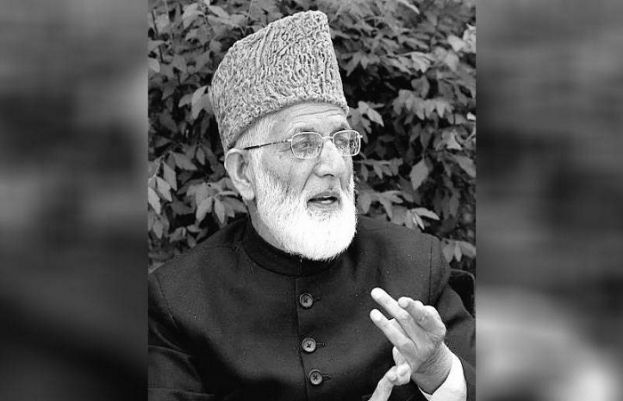
According to Kashmir Media Service, the veteran Kashmiri leader was 92.
Geelani had been under house arrest for many years, KMS added.
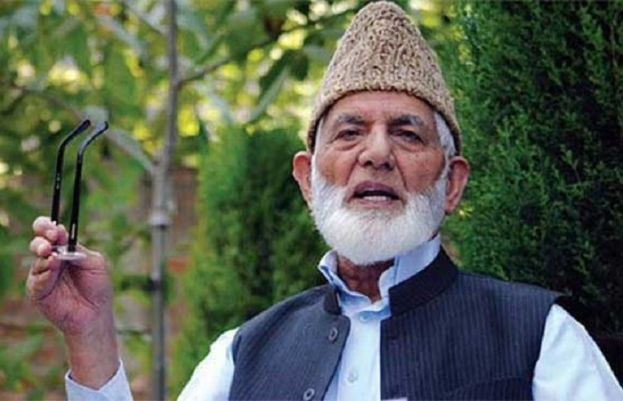
Syed Ali Geelani was born on September 29, 1929 in a village on the banks of Wular lake in Sopore area of Kashmir's Baramulla district, according to Anadolu Agency.
He remained a staunch opponent of India's illegal occupation of Jammu and Kashmir and lead the Kashmiris’ struggle for their right to self-determination.
Geelani was previously a member of Jamaat-e-Islami Jammu and Kashmir but later on founded his own party by the name of Tehreek-e-Hurriyat.
He also served as the Chairman of All Parties Hurriyat Conference, a forum of freedom parties in Jammu and Kashmir.
The veteran leader was a member of the Kashmir Assembly from the Sopore constituency of Jammu and Kashmir three times — 1972, 1977 and 1987.

Overseas Pakistanis have been allowed investment in Pakistani companies as well as funds operated by a private fund management company licensed by the Securities Exchange Commission of Pakistan.
The SBP said that it has trying hard to involve maximum number of overseas Pakistanis into the domestic economy. The new step has been taken to provide further investment and financing opportunities to non-resident Pakistanis (NRPs), the central bank added.
“To facilitate investment in real estate in Pakistan, financing facility has been allowed to RDA holders through their Pak rupee account using digital channels. In addition, inflow of funds into rupee denominated RDA has been allowed through Money Transfer Operators (MTOs),” said the SBP.
Earlier, investment through rupee denominated RDAs was allowed in registered government securities, listed securities on the stock exchange, mutual funds, real estate with self-financing and term deposits of the banks.
“The above changes will not only provide more investment opportunities to non-resident Pakistani but also facilitate them to purchase property in Pakistan through bank financing,” said the SBP.
Likewise, earlier the flow of funds into RDAs was allowed only through banking channels. Now inflows from abroad into RDA have been allowed through MTOs, said the SBP adding that this would provide another convenient and economical avenue for sending remittances, particularly to the NRPs who might not have a bank account abroad.
“The remittances received through RDA have already crossed $2billion,” the SBP added.

In an interview with Sky News, published on Wednesday, Qureshi said he is of the view if the Taliban are in charge they will need humanitarian and financial assistance.
"Otherwise, we will see an economic collapse, and do we want to see an economic collapse? And if there is an economic collapse, look at the repercussions, look at the consequences that would lead to.”
Qureshi said that Pakistan had asked for the peace process negotiations to move in tandem with the withdrawal of troops so there is no sense of insecurity and anxiety.
He said he had been saying in his engagements: "Withdrawal is inevitable. Make sure it is a responsible, orderly withdrawal."
“[What we saw on the television] was not responsible and not orderly," he told the interviewer, adding: "Why was there such a rush?"
The foreign minister said that the international community has to weigh its options now. The first option is engagement, as opposed to isolation.
Of isolation, he said: "It's a dangerous option. That's an option of abandonment, of Afghan people. Of people. I'm talking of the people.”
“That's the mistake that was committed in the 90s. I would urge the international community not to repeat the same mistake again,” he said, adding that if this happens “it could lead to a civil war, things could become chaotic, there could be anarchy”.
He said that will moreover give space to "the organisations that we all dread", the international terrorist organisations whose footprint we do not want growing.
When asked whether he wants the international community to recognise the Taliban as the legitimate rulers of Afghanistan, the federal minister said that he only feels that it is important to "engage" with the Taliban because the “consequences of disengagement are far worse.”
“The initial statements that the Taliban have made are positive, are encouraging,” he said.
Qureshi noted that the international community is sceptical because it is unsure if the Taliban mean what they have said and if they will implement the same, however, we should simply "test them".
When asked that whether the minister believes they have changed and can be trusted, Qureshi stated: “All I can say is I hope they have. I hope they have learned from their mistakes. They have suffered as well. They have been isolated.”
He added, however, that does not mean one should sympathise with them.
“I think the attitude and approach that they have demonstrated so far is reflective of a different approach,” he said.
“What I am saying is, test them before trusting them.”
Qureshi said we should “see if they live up to [the statements made] and if they do, then build on it because the other option is far worse”.
On people celebrating the Taliban's victory out in the streets of Pakistan, the foreign minister said: “First of all, if there was raising a flag in jubilation, do not forget that there are over four million Afghans living in Pakistan."
"Many have connections with the Taliban. They are related. They are family. They have been living here for almost four decades. They want to go back home. The prospect of returning home obviously gives you some sense of relief."
Qureshi dismissed the notion that Pakistan ever supported the Taliban, saying that Pakistan had always "sincerely cooperated" with the international community.
"The Taliban did not require our cooperation. [...] All the militants were [already] in Afghanistan. The political leadership were sitting in Doha negotiating. The fighters were in Afghanistan. Even before the withdrawal, 40-45% of the territory was under their control.
"They didn't need our nod, consent or help. They were managing their own affairs."

Batsmen Haris Sohail, Salman Ali Agha and Sohaib Maqsood also failed to make the cut, according to a statement issued by the cricketing body on Wednesday.
Meanwhile, the PCB included uncapped wicketkeeper Mohammad Haris, fast bowlers Mohammad Wasim and Shahnawaz Dahani, wrist-spinner Zahid Mahmood, and middle-order batsmen Iftikhar Ahmed and Khushdil Shah in the 20-member squad.
The PCB noted that Iftikhar's last international appearance had been against Zimbabwe in late 2020 while Khushdil's sole international appearance in the format had also been in the same match.
Chief Selector Mohammad Wasim said he knew that a few players would be "disappointed" at not being included. However, there was a busy cricket season ahead and there would be "ample opportunities down the line for everyone to put up strong performances and push their case for national selection".
Terming the series against New Zealand "extremely important" for Pakistan, as the Rawalpindi ODIs will count towards the ICC Men's Cricket World Cup qualification, Wasim said the PCB had tried to put together a "formidable and balanced unit".
"We have continued to ensure that we give opportunities to high-performing players while looking into the future so that we can develop a strong bench-strength," the PCB statement quoted him as saying.
Wasim said it was "unfortunate" that Shahnawaz had been missed during the team selection for Pakistan's tour of England last month since the national squad was announced before the completion of Pakistan Super League (PSL) 6.
Therefore, the fast bowler was a "straightforward selection" for the upcoming series, he said. Mohammad Wasim was also given a continued run because of his impressive performance during the series against West Indies, he added.
Giving further details about the squad, the chief selector said Zahid was added to the team to support leg-spinner Usman Qadir. He recalled that Zahid had excelled in the last white-ball match he played against South Africa in Lahore.
The wrist-spinner had the temperament to perform in ODIs, Wasim added.
While Mohammad Rizwan would remain the first choice for wicketkeeper, Mohammad Haris was included in place of Sarfaraz "not only to reward Haris for his outstanding domestic performances in the previous season but also to give him a taste and flair of international cricket along with its rigours and demands", Wasim further said.
The middle-order has remained a concern for the PCB, the chief selector said, adding, "after trying a few options, we have decided to give another run to Iftikhar and Khushdil."
Noting that the two players had sufficient domestic experience in the format, he said the PCB was "optimistic they will come good in home conditions".
Pakistan squad: Babar Azam (captain), Abdullah Shafique, Faheem Ashraf, Fakhar Zaman, Haris Rauf, Hasan Ali, Iftikhar Ahmed, Imamul Haq, Khushdil Shah, Mohammad Haris, Mohammad Hasnain, Mohammad Nawaz, Mohammad Rizwan, Mohammad Wasim Junior, Saud Shakeel, Shadab Khan, Shaheen Shah Afridi, Shahnawaz Dahani, Usman Qadir and Zahid Mahmood.
Pakistan will play three ODIs against New Zealand at the Pindi Cricket Stadium on Sept 17, Sept 19, and Sept 21. Meanwhile, the Gaddafi Stadium will stage the five T20Is scheduled to take place from Sept 25 to Oct 3.

Addressing the launch ceremony for the programme in Islamabad, the premier said that 20 million children not going to schools was a "major issue" for the country, and regretted that due importance was not paid to their education, adding that it was important to rectify the issue.
He said a country's biggest assets "are its people" and that not providing them education was akin to "wasting your asset".
"By denying the opportunity for upwards [social] mobility, you do a great injustice with that segment," he said.
The stipend initiative, the premier said, would serve to "incentivise and encourage" children to attend schools.
The prime minister particularly highlighted how more girls were out of school than boys. "We did not give importance to education but especially, and unfortunately, we did not give importance to the girls' education," he said.
The prime minister said that a well-educated woman was of greater benefit to the society than a well-educated man because she "teaches her kids and changes the entire system of her household [such as] health and wellbeing of children, which have a lot of societal impact".
"The West says that we do not want to educate our girls but this is not the case. I've visited every region of Pakistan [...] and nowhere did I go and see such households where parents wanted their girls to not study," the he said.
PM Imran said other issues, such as ease of access, contributed more to a lack of girls' education than the will of the parents. He identified a dearth of schools and faculty as the driving factors behind the menace.
"Parents from everywhere ask me to open schools for girls so it is not that they don't want to educate [their daughters]," he said. "It was the government duty to facilitate them that was missing till now."
The prime minister also praised the incorporation of information technology (IT) in the programme to ensure transparency and ward off corruption.
"Through [the use of] IT, we will attain control over most of these issues and, in a very transparent manner, [distribute] these stipends to children and incentivise them and monitor them," he added.
According to a statement issued by the Prime Minister's Office, the stipend will be given to "deserving parents", who can ensure 70 per cent attendance of their children in schools.
"In this programme, the amount of stipend has been kept especially higher for girls. School stipends are for primary, secondary and higher secondary education," it added.
A press release said that the programme would be rolled out nationwide across all districts.
It said that at the primary level, the boys will get quarterly stipends of Rs1,500 and girls Rs2,000; at the secondary level, the boys will get Rs2,500 and girls Rs3,000; and at the higher secondary level, boys will get Rs3,500 and girls Rs 4,000. The stipends will be issued every quarter.

The Russian leader has a track record of criticising Western countries for trying to impose their values on non-Western nations.
Moscow has regularly slammed the US policy in Afghanistan, which is now controlled by the Taliban after their takeover this month ahead of the American pullout on August 31.
Putin said on Wednesday that the US army tried to “engrain their norms” in war-ravaged Afghanistan for two decades, which he characterised as a futile exercise.
“The result is only tragedies, only losses for those that did it — for the US — and even more so for the people who live on Afghan territory,” he said.
It is “impossible to impose anything from outside”, he said.
He was speaking at a meeting with teenagers in the Russian far eastern city of Vladivostok to mark the start of the school year.
Last week, Putin said Russia would not interfere in Afghanistan and that Moscow had learned from the Soviet occupation of the country.
He has also complained about Western countries trying to place Afghan refugees in Moscow-allied Central Asian states.
Moscow has been cautiously optimistic about the new leadership in Kabul, saying it would not meddle in domestic affairs.

“This is the right decision. A wise decision. And the best decision for America,” Biden said in an address to the nation in Washington after he stuck to an August 31 deadline to end two decades of bloodshed that began and ended with the Taliban in power.
He spoke after the United Nations warned of a looming “humanitarian catastrophe” in Afghanistan, underscoring the daunting challenges that the victorious Taliban face as they transform from insurgent group to governing power.
For America, Biden argued, the only choice in Afghanistan was “leaving or escalating.”
And the president, whose critics have savaged him for his handling of the withdrawal, said the frenzied airlift — which saw the United States and its allies fly more than 120,000 people fleeing the new Taliban regime out of Afghanistan — was an “extraordinary success.”
“No nation has ever done anything like it in all of history; only the United States had the capacity and the will and ability to do it,” he said.
In his remarks, he noted that 90% of Americans who were in Afghanistan and wanted to leave were able to leave. The White House later updated a transcript of his remarks to show that the correct figure was 98%.
Biden said the international community would hold Taliban leaders accountable for their promise to permit freedom of travel.

The opposition parties alliance has decided to hold public meetings and road caravans in Punjab.
It is pertinent to mention here that the PDM has summoned its summit session on September 08 in Islamabad to decide about the strategy of the protest drive.
According to sources, the alliance will focus on Punjab and Balochistan provinces, while public meetings and road caravans will also be organized in rural parts of Sindh.
PDM chief Maulana Fazlur Rehman in a public meeting in Karachi on Sunday said that the opposition’s movement would no longer be restricted to only holding public gatherings but will launch a road caravan so that citizens can protest for their rights.

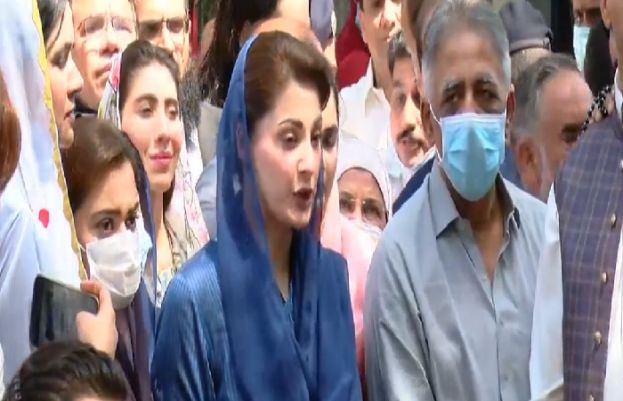
Speaking to the media after appearing for a hearing of the Avenfield reference case, the PML-N leader said reconciliation was out of the question.
"One should not even hold talks with these people [government]," she said, adding that except for the PTI, all political parties should unite and think about the welfare of Pakistan.
She commented on the Media Regulatory Authority, saying that the government is creating hurdles for the media and Opposition, adding that the bill was a continuation of the incumbent government's policies aimed at censoring the media.
Maryam said Opposition parties should concentrate on how the government is employing efforts to rig the upcoming elections. She said the government was exacting political revenge in the name of accountability.
In response to a question on Nawaz Sharif's return, she said:
"Circumstances have changed a lot. Very soon, you will see a lot of things change. Nawaz Sharif will return to the country when it is necessary for him to do so."
Proceedings of the Avenfield Reference against the PML-N vice president and her husband, Captain (retd) Safdar, have been postponed till September 8.

Muhammad Amjad Saqib, 64, won the Ramon Magsaysay Award for his “first-of-its-kind” interest- and collateral-free microfinance programme that catalysed scores of poor households.
Nearly two decades after its launch, Akhuwat — founded by Dr Saqib — has grown into the nation's largest microfinance institution, distributing the equivalent of $900 million and boasting an almost 100 per cent loan repayment rate, the award foundation said.
Saqib, who uses places of worship to hand out money, was cited for “his inspiring belief that human goodness and solidarity will find ways to eradicate poverty.”
The Ramon Magsaysay Award — named after a Filipino president killed in a plane crash — was established in 1957 to honour people and groups tackling development problems.
Meanwhile, Firdausi Qadri, 70, also won the award for her “life-long devotion to the scientific profession” and “untiring contributions to vaccine development”.
Working at the International Centre for Diarrhoeal Disease Research in Bangladesh's capital Dhaka, Qadri had a “key role” in creating more affordable vaccines to combat cholera and typhoid, the Manila-based award foundation said in a statement.
Qadri was also cited for her leading role in a mass vaccination effort in Rohingya refugee camps in Bangladesh's southeastern district of Cox's Bazar in recent years that prevented a cholera outbreak. The disease causes acute diarrhoea and spreads through contaminated food and water.
Qadri was also cited for her efforts to build up Bangladesh's scientific research capacity.
“I'm overwhelmed, extremely delighted but also humbled,” Qadri said in a video message shared by the foundation.
It was held virtually this year after the event was cancelled in 2020 due to the coronavirus pandemic.
Another winner was Filipino fisherman Roberto Ballon, 53, who was recognised for helping “revive a dying fishing industry” on the southern island of Mindanao where abandoned fishponds had destroyed mangrove forests.
With government backing, Ballon and other small-scale fishermen replanted 500 hectares (1,235 acres) of mangrove forests by 2015, boosting their fish catch and quality of life.
“What was once a desert of abandoned fishponds is now an expanse of healthy mangrove forests rich with marine and terrestrial life,” the award foundation noted.
American Steven Muncy, the founder of the Philippines-based NGO Community and Family Services International, was recognised for helping refugees, assisting victims of natural disasters and getting former child soldiers back to school in Asia.
Indonesian documentary maker Watchdoc, which focuses on human rights, social justice and the environment, also won recognition for its “highly principled crusade for an independent media organisation”.

It also decreased the price of kerosene by Rs1.5 and that of light diesel oil (LDO) by Rs1 per litre, respectively.
According to a notification issued by the Finance Division, the new price of petrol will be Rs118.3 per litre, HSD will be Rs115.03 per litre, kerosene will be Rs86.80 per litre and LDO will be Rs84.77 per litre.
The rates have been reduced despite fluctuations in the prices of petroleum products in the international market and anticipated increase in the future, the government said.
"The government is firmly committed to ensure stability in prices of essential commodities and has sustained the price pressure in line with its commitment to the common man," it added.
It noted that the petroleum levy was kept at a minimum which was a "clear reflection that the government is fully cognisant" of the impact of higher petrol prices on basic commodities.
According to Petroleum Division sources, the Oil & Gas Regulatory Authority (Ogra) calculated Rs3.50 per litre reduction in the ex-depot price of petrol and about Rs5 per litre decrease in the ex-depot price of HSD.
Likewise, the ex-depot price of light diesel and kerosene oil was calculated to go down by Rs2 and Rs3 per unit, respectively.
The price cuts were worked out because of lower international oil prices even though the exchange rate had deteriorated over the past 15 days of August.
As of now, the government is charging 17 per cent general sales tax on HSD, followed by 10.54pc on petrol, 6.70pc on kerosene and 0.20pc on light diesel. The standard GST rate is 17pc, which means the government is foregoing significant revenue flow.
The government is also charging a negligible Rs2.05 per litre petroleum levy on HSD and 24 paisa per litre on light diesel and zero on petrol and kerosene. This means the government is also losing substantial revenue on a solely federal tax.
On August 15, the government had kept unchanged the price of petrol at Rs119.80 per litre and that of HSD at Rs116.53 per litre. On the other hand, it had increased the ex-depot price of kerosene by 81 paisa per litre to Rs88.30. Also, the ex-depot price of light diesel oil was increased by Rs1.10 per litre to Rs85.77.